Pallas Capital strikes back

The Double Bay private credit firm's rebuttal raises more questions than it answers.

Pallas Capital strikes back
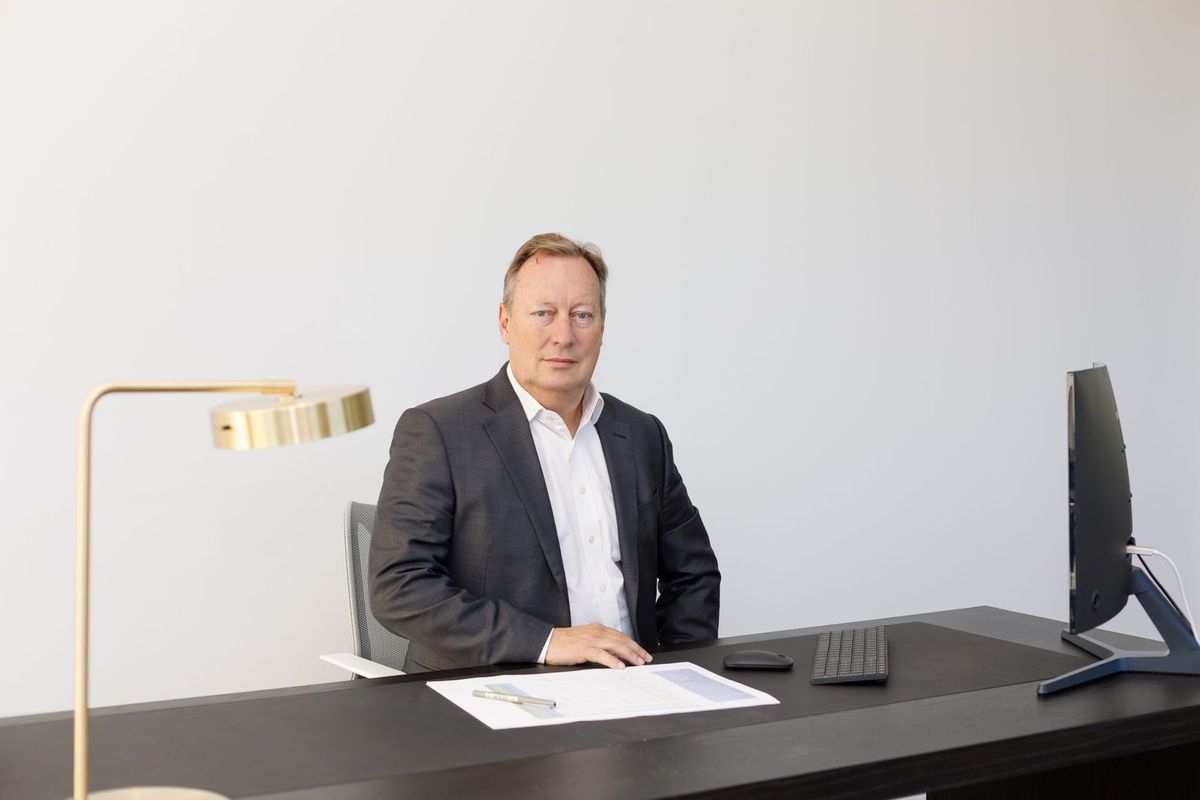
Pallas Capital Executive Chairman Patrick Keenan. Photo: Pallascapital.com.au

In response to my article last month about the orgy of related-party lending between Sydney private credit manager Pallas Capital and the projects of its sibling developer Fortis, Pallas issued a rebuttal memo to its distribution team – being the modern-day equivalent of a door-to-door vacuum cleaner salesforce. This memo has subsequently found its way to various Pallas fund clients, and from them to yours truly. 

For those who didn't read it or promptly forgot it, my piece revealed the sheer extent of Pallas' loans to Fortis property developments in four of Pallas' spiciest funds. Related-party loans comprised precisely 61 per cent of the total assets of those four funds. Pallas was coaxed to disclose this for the first time in April after the Australian Securities and Investments Commission expressed its pointed dissatisfaction with the related-party disclosures of private credit managers and set them higher expectations. 

My piece also used two Fortis projects as case studies of dubious practices within the Pallas-Fortis industrial complex: a failed development in Mascot acquired by a Fortis-related development trust to avoid Pallas recording a loan default; and an office building in Double Bay where the extraordinary Pallas loan (150 per cent of the purchase price) was justified by a valuation linked to a way-above-market lease signed by a tenant company also owned by the Pallas-Fortis principals. 

The tricks Pallas Capital learned from Jon Adgemis
The doctors and dentists of Bondi Junction may want to read the fine print.

Pallas Capital's response is well worth scrutinising. It labels me a journalist "at the sensationalist end of the spectrum," while my article, it claims, "grossly mischaracterises the true position" and "misrepresents a collection of selective facts". Yet it does not identify a single material fact in my article that was wrong, nor even a fact I selectively omitted. Instead, it disgorges a litany of irrelevant data points while entirely evading the primary issue of their conflicts of interest. 

For instance, "In the last two years, [Fortis special purpose vehicles] have repaid nine loans totalling almost $290 million to PAG, Metrics and other lenders… Currently such SPVs have loans against 17 different properties from CBA, Macquarie Bank, Bank of Queensland, St George Bank, La Trobe, PAG and others." 

Look at all these reputable lenders – household names! – we do business with. We, too, must be reputable. But my article had nothing to do with third-party lending to Fortis projects. My article even noted that "there is no doubt that Pallas has cleaner funds full of third-party loans that offer lower returns to institutional investors…" For very good reasons, none of the third-party lenders named here by Pallas are lending to the Mascot or Double Bay deals I featured in my article. 

Again, my article was specifically about Pallas' lending to Fortis projects via Pallas' high-risk funds, which are jam-packed with related-party loans. These spicy funds, I explained, are "fed into the sleepy wholesale network" of eastern suburbs types who "barely scan the first two pages [of fund documentation] before remitting their $200,000."

Pallas also grumbled that my article "refers to the 100 per cent record of performing/fully repaid loans by Pallas Capital to SPV related-party borrowers as 'miraculous', implying that the record is not true. The reported position is true and we are proud of that." 

My use of 'miraculous', I do confess, was sarcastic – though I wasn't implying that Pallas' perfect record of performing loans isn't technically true. I was implying that it is, in effect, manufactured. 

My entire point was that a related party has both the incentive and the ability to avoid recording a default. Indeed, Fortis' hotel project at Mascot is the perfect case study. There, a Pallas loan didn't default solely because an SPV purchased the asset in distress but at an inflated price, then rolled it into a new Pallas loan. Avoiding default is the very outcome my article demonstrates can be engineered by the Pallas-Fortis money-go-round. 

The Mascot question

In defending its conduct of the Mascot hotel development, Pallas has actually raised more questions than it answered. Pallas confirmed that a development trust (known interchangeably as an SPV trust) acquired the site in late 2025 from the Pallas-appointed administrator after the original owner defaulted on its loan to Pallas. The trust paid $27.4 million (plus GST). 

Pallas predictably claimed that "numerous well-capitalised parties submitted interest to purchase the site" and that "a number of these were within 10 per cent of the SPV purchase price", which is both extremely unlikely and completely unverifiable. Bear in mind, the original developer paid just $8.6 million for the site in 2022.

Documents obtained by Rampart show that in November 2025, Pallas offered its clients the opportunity to invest in a $67 million loan to the Mascot development, explicitly relying on an $80 million "as if complete" valuation. Yet in its response to my article, Pallas said this valuation was only completed in December 2025, which certainly makes you wonder how Pallas was peddling the valuation to its clients the previous month.

Pallas confirmed this valuation was provided by m3 – the very valuer that in July 2022 provided a $12.2 million valuation on the site for first mortgage security purposes (i.e. a legitimate valuation). This was prior to partial construction works being completed (Pallas says these works cost $14.4 million, though whether they added that much additional value is a different question).

In 2024, Ray White Valuations provided an "as if complete" valuation of $58 million to the original developer. Importantly, neither this valuation, nor m3's later $80 million valuation, were to be relied upon for first mortgage security purposes. 

This is where it all gets a little smoky. The Ray White valuation was based on a hotel with 124 rooms. In its rebuttal of my article, Pallas claims "the original approval was for 124 rooms at the time of acquisition" but that "In January 2026, we lodged a further application to increase the scheme to 144 rooms. We anticipate Bayside Council to formally approve this application next week." And indeed, the modification to the development application was approved on June 9.

Notably, the increase in keys has been achieved by jamming more of them into the same building envelope.[[The council's description of the DA modification includes "construction of an additional floor" yet Pallas told its clients in November 2025 (in the same document it touted the $80 million valuation) that "the DA modification is relating to the re-design of the internal floorplan and there will be no change to the approved building envelope and building height."]] Guests will now be able to touch the ceiling without even standing on their toes. Not to put too fine a point on it, but I wouldn't foresee Four Seasons or Mandarin Oriental clamouring for the management rights to this property.

It's not clear whether m3's $80 million valuation is or is not based on the increase in rooms. If it is, then m3 provided a $22 million uplift based on a scope change that was six months away from receiving planning approval. If it's not, then m3 provided a $22 million uplift on Ray White's already punchy valuation on no discernible basis. Either way, it is loosey-goosey. I mean, what lender extends a construction loan while the DA is still pending?

There are also open questions about the ownership structure of this project, especially in light of Pallas Capital's ludicrous insistence that "Fortis is not a property developer and has never borrowed any money" and that "each of the two projects discussed in the article is held in standalone SPV trusts." This is a complete try-on. I might as well claim I'm not the proprietor of Rampart because its equity is beneficially held by my family trust. I'm also the sole director and shareholder of the trustee, so it's a distinction without a difference. 

How dumb do these people think their clients actually are? As Pallas itself admits my article made clear, all of Fortis' projects are held in development trusts, which is standard across the industry. No reasonable person looking at Fortis' website would think it is anything other than a property developer. 

Indeed, the information memorandum for the other project I explored in my previous article – 377-383 New South Head Road, Double Bay – states that "the developer/development manager of the project is Fortis". The three directors and shareholders of the Double Bay trustee are Patrick Keenan, Charles Mellick and Dan Gallen, who are collectively the majority owners of Pallas and Fortis.[[The three equal shareholdings of the Double Bay trustee are indirect, via Jubilee Group Pty Ltd (owned jointly by Patrick Keenan and his wife Elizabeth), CF Mellick Pty Ltd and Gallen Holdings.]] 

Pallas Capital majority owners Dan Gallen, Charles Mellick and Patrick Keenan. August 2021. Photo: Pallas Capital

The Mascot project, however, is slightly different. Messrs Keenan, Mellick and Gallen are described in Pallas Capital's loan document as the personal sponsors and guarantors of the loan to the Mascot trust. They also control the lender, so they stand in front of the loan and stand behind the loan; and they control the development co-manager, though in this case they don't control the trustee of the SPV. 

That dubious honour falls to Andrew Daoud of Dowco Property Group, who is the sole director and shareholder of the project's trustee. Daoud was disqualified from managing companies between 2011 and 2014, though that plainly hasn't held him back. Back then he lived in Punchbowl, whereas now he lives in Point Piper. 

Pallas Capital's client communications describe Dowco and Fortis as joint development managers, though Dowco's website carries no mention whatsoever of the Mascot project. Dowco's head office is, however, located within Pallas House in Double Bay – directly above Neil Perry's restaurant Margaret. 

Pallas also took exception to the implication that the Mascot SPV trust had not contributed any equity to support its Pallas loan – though I actually included Pallas' statement that the borrower "made a substantial cash contribution". I was certainly sceptical about this equity because why was it never mentioned in the loan pitch sent to Pallas clients? If there was any developer equity, you'd have it up in lights, because investors in the debt want to see a developer's skin in the game. When it's not mentioned at all, any investor would assume the equity is negligible or even zero. 

I was also expressing my honest confusion about the capital stack of the project if I was to take Pallas' statement at face value. If the SPV really is contributing "over $10 million" of equity to the project in addition to Pallas' $67.7 million loan, that would take the debt and equity to "over" $77.7 million against m3's valuation of $79.6 million.[[It is also highly irregular that the SPV is being permitted to contribute part of its $10 million equity cheque upon completion. Why wouldn't all of that equity be required upfront, ahead of the debt, especially when Pallas is lending at an 85 per cent loan-to-value ratio – an LVR that is also highly irregular in the commercial finance industry.]] What sane developer would risk building a hotel – among the highest-risk development assets – in a C-grade position to make itself less than $2 million? 

Of course, Pallas touts a further "valuation opinion" from Savills that "estimates" a value of $98 million, or $680,000 per key, which is downright fanciful. I'll happily stand corrected, but I'd bet the only party prepared to offer such a price will be another Pallas fund.

As a comparable asset, look no further than the 150-key Citadines Connect Sydney Airport, a hotel that first opened its doors in February 2018 as the Felix Hotel Mascot but was  rebranded after its purchase in 2019 by Singapore-listed CapitaLand Ascott Trust for $61 million (or $404,000 per key). 

Ascott has repeatedly marked down the carrying value of the hotel in its accounts, to $52.2 million (or $348,000 per key) at December 2024, then $46.3 million (or $309,000 per key) at December 2025.[[These valuations are imprecise as Ascott reports in Singaporean dollars. I have relied on a 1.1 SGD-AUD exchange rate at both the 2024 and 2025 balance dates.]] 

The Double Bay defence

There is just so much nonsense in the Pallas rebuttal that I've barely scraped the surface. Its comeback on the Double Bay valuation based on the aerated rental income Pallas-Fortis is paying itself is just risible. 

Pallas claims "the quoted $1,650 per square metre rent is on the lower side of net rents achieved across Double Bay from third-party tenants". It should be on the lower side! As our previous article pointed out, this hemmed-in building on the thunderous main road is not comparable to offices on tranquil Bay, Knox or Cross Streets. Let me repeat: $1650 is 3.5 times the net rent ($464 per square metre) being paid by the previous tenant.

What's more, "net rent" excludes the hefty rebates and incentives routinely hidden in lease agreements with other tenants so as to show extremely high face-value rents and pump the value of the building. 

"The major banks accept the related-party nature of the tenancy, and the intention is to refinance into a major bank investment facility," Pallas claimed. Just think about that for a moment. Fortis paid $26 million for the building, put in no equity, allegedly spent $10 million on improvements, and borrowed $39 million from Pallas based on a $52 million valuation. Even assuming that major banks do accept the valuation, they are at most going to lend 60 per cent, or $31 million. So what about the shortfall? 

Note that Pallas isn't claiming Fortis will sell the building. Again, who on earth would meet its valuation based on goosed rental income to itself? Fortis couldn't even sell its primo building, 2 Guilfoyle Avenue, in 2023 based on its eye-watering third-party rents.

There is never any shortage of delusion manifesting in Double Bay village, though even by local standards the levels emanating from Pallas House are anomalous. There is simply no way the Pallas-Fortis principals can put their hand on their hearts and honestly say their companies have adhered to best practice, been unimpeachably prudent with investor capital, and put its fund clients' interests ahead of their own at all times. 

Like most other wayward schemes in the finance industry, what stands out is the lack of protections afforded to dopey wholesale investors, who always end up losing out while institutions, by virtue of their sophistication, sail through. Spare a thought for the doctors and dentists of Bondi Junction.

There’s private credit, then there’s Metrics
Leading restaurateur Andrew Lockhart speaks out.

Author

Joe Aston

Joe Aston is the founder of Rampart. He is an Australian Financial Review columnist and the best-selling author of The Chairman’s Lounge: The Inside Story of How Qantas Sold Us Out. Contact Joe at hello@rampart.news
Read more